
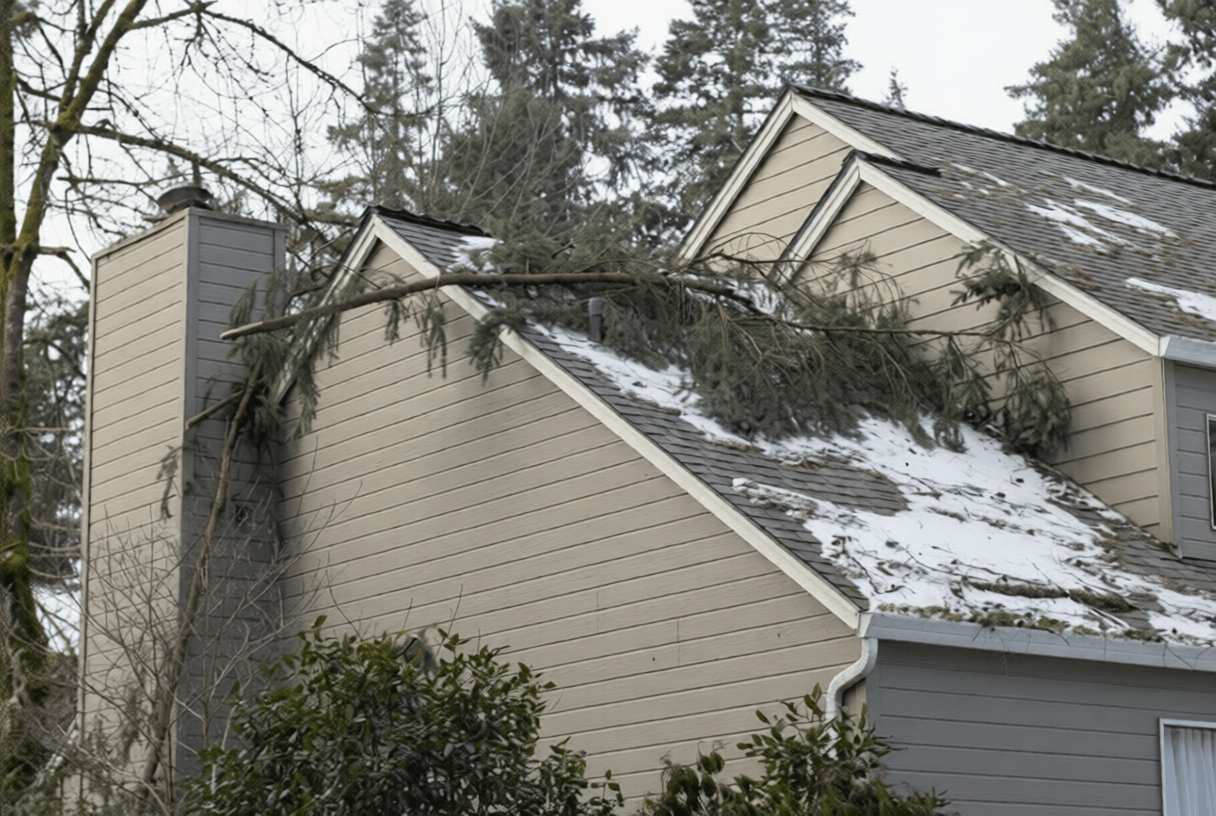
Winter has a way of leaving behind more than just cold memories. Snow, ice, wind, and freezing temperatures quietly test the strength of your roofing system for months. The problem is, not all winter roof damage is obvious. By the time homeowners notice a water stain or leak, the issue has often been developing for weeks or longer. Taking immediate action matters.
The Damage You Cannot See From the Ground
From the street, your roof may look perfectly fine. Even drones only pick up surface views, which is certainly not the full story. But winter weather creates small vulnerabilities that are easy to miss. Ice buildup along the edges, repeated freeze and thaw cycles, and heavy snow loads can compromise and weaken roofing materials.
Shingles can crack or lift during cold snaps. Flashing around chimneys and vents can loosen. Sealants shrink and separate. These issues may not cause immediate leaks, but they create entry points for moisture. Once spring rains arrive, those small weaknesses can turn into major problems.
Ice Dams and Water Intrusion
Even if large icicles are gone, the effects of ice damming remain. When snow melts unevenly and refreezes at the roof’s edge, water can back up under shingles. This trapped moisture can soak into the roof deck and insulation below.
Over time, that hidden moisture can cause wood rot, insulation damage, and mold growth. Homeowners may only discover the issue when they see stains on ceilings or peeling paint near walls. By then, the repair is no longer just about shingles and underlayment. It becomes an interior repair as well.
B&B Siding & Roofing frequently identifies post winter damage that homeowners did not even realize existed. Catching these issues early prevents further deterioration and protects the structure beneath the surface.
Wind and Cold Weather Stress
Winter storms do not just bring snow. Strong winds combined with freezing temperatures make roofing materials more brittle. Shingles that might withstand summer storms can crack or break in extreme cold.
Loose shingles, damaged ridge caps, and compromised flashing are common after a long winter. These components are critical to keeping water out. Even one missing shingle can expose your roof to gradual moisture damage that worsens over time.
Gutters and Drainage Problems
Your roofing system does not stop at the shingles. Gutters and downspouts play a major role in directing water away from your home. During winter, debris, ice, and heavy snow can clog or damage gutters.
When drainage is restricted, melting snow and spring rain can pool along the roof edge. Standing water increases the risk of leaks and fascia damage. A thorough inspection includes checking the entire system to ensure proper water flow as seasons change.
Signs It Is Time for an Inspection
There are a few warning signs homeowners should never ignore. Water stains on ceilings, unexplained drafts, higher energy bills, or granules collecting in gutters all point to possible roof damage. However, the safest approach is not to wait for visible signs.
A professional roof inspection after winter is one of the smartest preventative steps you can take. B&B Siding & Roofing evaluates shingles, flashing, ventilation, structural integrity, and conducts a comprehensive attic evaluation to uncover hidden warning signs. Our goal is to provide recommendations to ensure your peace of mind and the confidence that your roof is ready for spring and summer storms.
Protecting Your Investment Year Round
Your roof protects everything beneath it. Small winter related issues can escalate quickly if left untreated. Addressing damage early extends the lifespan of your roof and prevents costly emergency repairs later in the year.
If winter has been harsh to your home, do not assume your roof escaped unscathed. A proactive inspection by the trusted professionals at B&B ensures hidden damage is identified and corrected before it becomes a bigger problem. Just give us a call at (866) 474-0561 to schedule your service today.